





Editorial board /
 Dr. Marija Karanikić Mirić [ Editor in Chief ]
Members / Dr. Dušan Popović, Dr. Mirjana Drenovak Ivanović, Dr. Danilo Vuković, Dr. Svetislav Kostić, Dr. Vojislav Stanimirović, Dr. Maja Lukić Radović
Web Editor / Dr. Boris Begović
Managing Editors / Dr. Nikola Ilić, Dr. Novak Vujičić
Technical Editors / Ksenija Džipković, Dr. Vukašin Stanojlović
- ADDENDUM /
Complete issue – ready for easy download
Author /- 2026 Editorial Board
- ADDENDUM /
Table of Contents
Author /- 2026 Editorial Board
- ARTICLE /
Project Fear: Emotions, Game Theory, and Failed Persuasion in Ancient Greek and Contemporary Politics This paper examines Project Fear, the use of threat-based rhetoric to influence collective decisions, by analyzing Thucydides’ Melian Dialogue and Demosthenes’ On the Liberty of the Rhodians and comparing them with Brexit (2016) and Grexit (2015), respectively, using the theoretical frameworks of cognitive theories, particularly game theory and prospect theory. Two cognitive distortions affecting kairos, rational understanding, and decisionmaking are identified: hope (elpis) and anger (orgē). Project Fear fails when the stronger party relies on high-intensity threat signals without recognizing that, once the weaker audience perceives its status quo as one of massive, existential loss, hope and anger act as psychological multipliers, transforming negligible possibilities into viable strategies.
Author /- ARTICLE /
Navigating Disputes Beyond Earth: A Critical Analysis of the PCA Outer Space Rules The rapid commercialization of outer space, including satellite deployment, space tourism, and asteroid mining, has created an urgent need for effective dispute settlement mechanisms. As private and international actors increasingly participate in space activities, disputes are likely to intensify. In response, the Permanent Court of Arbitration adopted the 2011 Optional Rules for Arbitration of Disputes Relating to Outer Space Activities, establishing a specialized framework for resolving space-related conflicts. This paper critically examines these Rules, highlighting features such as confidentiality protections, technical expertise, and party autonomy. It assesses their compatibility with existing international space law, including the 1967 Outer Space Treaty, while identifying challenges related to voluntary jurisdiction and enforcement of awards. Through illustrative dispute scenarios, the study evaluates the Rules’ practical relevance and proposes reforms to enhance their accessibility, effectiveness, and alignment with contemporary international space governance.
Authors /- ARTICLE /
Artificial Intelligence in Contractual Performance: Liability for Breach of Contract Artificial intelligence (AI) is taking on a larger role in contract performance. Due to the use of AI, debtors may fail to perform their obligation in the agreed manner, thereby causing damage to creditors. Since this matter is not regulated by EU hard law or soft law, the contractual liability arising from the use of AI is governed by the applicable domestic law. This raises the issues regarding the applicability and adequacy of the rules on contractual liability. In legal systems where contractual liability is strict, the rules can be directly applied. However, in systems that require fault, proving it becomes difficult when AI is involved, leading to a liability gap. The paper analyses four approaches to overcoming the liability gap: granting legal personality to AI, treating AI as an agent, regarding AI as an auxiliary, and introducing an exception in the form of strict liability.
- ARTICLE /
Legal Consciousness of Businesspeople in Serbia: Relational, Political and Inconsistent? This exploratory study examines the legal consciousness of small business owners in Serbia during intense political crisis and institutional instability. We analyze perceptions of the law and how they are shaped, and the findings show that respondents view the law primarily as an instrument of the political elite rather than a safeguard of individual rights and freedoms, with selective enforcement and the elite’s legal impunity being the most notable features of the Serbian legal system. We thus conclude that legal consciousness is (1) macro-relational and closely intertwined with perceptions of governance and the political elite, and (2) micro-relational and grounded in direct personal experience with legal institutions. In the Serbian context, featuring political ruptures and legal abuses, legal consciousness is less about the shared creation of legal meaning and more about perceptions of the political elite’s behavior. The study proposes distinguishing between macro and micro relational levels of legal consciousness.
Authors /- ARTICLE /
Acquisition of Ownership Through Adverse Possession of Socially Owned Land The removal of the provision prohibiting the possibility of acquiring ownership through usucapio of land in social ownership has created numerous dilemmas and made this legal institute topical. The courts have faced not only the challenge of determining how to assess the legality and conscientiousness of the possessor, but also the question whether the time that elapsed before the prohibition was lifted could be included in the time period for acquisition of ownership. Considering the significant number of court disputes, the authors believe that it is important to address this issue. Although it seems that the institute of usucapio is slowly fading into obscurity, because it contradicts the idea of properly maintained land registers, the fact is that courts still resort to its rules, since it sometimes remains a last resort in their attempts to transform certain factual situations into legal ones.
Authors /- Author /
 This paper examines Project Fear, the use of threat-based rhetoric to influence collective decisions, by analyzing Thucydides’ Melian Dialogue and Demosthenes’ On the Liberty of the Rhodians and comparing them with Brexit (2016) and Grexit (2015), respectively, using the theoretical frameworks of cognitive theories, particularly game theory and prospect theory. Two cognitive distortions affecting kairos, rational understanding, and decisionmaking are identified: hope (elpis) and anger (orgē). Project Fear fails when the stronger party relies on high-intensity threat signals without recognizing that, once the weaker audience perceives its status quo as one of massive, existential loss, hope and anger act as psychological multipliers, transforming negligible possibilities into viable strategies.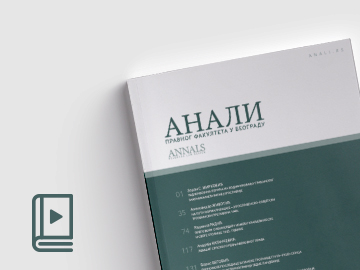
 © 1953 - 2026 · Annals of the