





Editorial board /
 Dr. Marija Karanikić Mirić [ Editor in Chief ]
Guest Editor / Dr. Danilo Vuković
Members / Dr. Dušan Popović, Dr. Bojan Milisavlјević, Dr. Vojislav Stanimirović, Dr. Mirjana Drenovak Ivanović, Dr. Danilo Vuković, Dr. Svetislav Kostić
Web Editor / Dr. Boris Begović
Managing Editors / Dr. Nikola Ilić, Dr. Novak Vujičić
Technical Editors / Ksenija Džipković, Dr. Vukašin Stanojlović
- ADDENDUM /
Complete issue ready for download
Author /- EDITORIAL BOARD 2024
- ADDENDUM /
CONTENT
Author /- Editorial Board 2024
- ADDENDUM /
Editorial note
- ARTICLE /
Clientelistic Linkages in the Western Balkans: Dalp II Expert Survey EvidenceThis paper examines the role of clientelism as a mobilization strategy in the Western Balkans, focusing on its interplay with other linkage strategies and its two primary sub-types: electoral and relational clientelism. Drawing on data from the Democratic Accountability and Linkages Project II (DALP II) expert survey, the study covers six party systems: Albania, Bosnia and Herzegovina, Kosovo, Montenegro, North Macedonia, and Serbia. The findings reveal that clientelism is one of the most frequently employed strategies in the region, characterized by durable linkages between parties, brokers, and voters, the distribution of public resources, significant use of negative inducements, and targeting across income groups. Relational clientelism, or patronage, emerges as the dominant form, extending beyond electoral goals to function as an organizing principle within party structures. This paper contributes to the understanding of clientelism in the region and highlights its implications for democratic accountability and governance.
- ARTICLE /
Recruitment of Authoritarian Individuals into Clientelist NetworksUnderstanding how brokers choose clients for vote-buying exchange is one of the key issues in explaining the success of these illicit practices. Norm-based theories seek an answer to this question based on individuals’ values and beliefs, which would make them suitable candidates for vote-buying. A recent addition to this literature suggests that there might be a distinct authoritarian feature among the targeted voters. Building on the findings of this study, this paper examines the relationship between authoritarian tendencies and the offer of clientelist exchange in six Western Balkan countries. Overall findings vary significantly across countries: in Montenegro, Serbia, and Albania some associations were found, albeit not all in the theoretically predicted direction. In Bosnia and Hercegovina, Kosovo, and North Macedonia authoritarian tendencies were not related to an offer of clientelist exchange. The results point to a highly contextualized importance of authoritarian tendencies for the success of clientelist exchanges.
- ARTICLE /
Youth Justification of Informality in the Post-Yugoslav CountriesInformal practices are rather widespread in post-Yugoslav societies, representing a complex problem with significant social, economic and political implications. The study investigates the factors that determine or contribute to shaping young people’s benevolent attitude towards certain types of informality, by exploring the determinants of informality justification or permissiveness towards certain forms of informal practices. Firstly, justification of informal practices are observed as a reflection of youth political socialization, which imply their relation to the political system and democratic values. Secondly, this type of justification potentially stems from their rational evaluation of institutional performance by estimating the necessity of informality as a mechanism to navigate the perceived inefficiencies of formal institutions. By examining these dimensions, the aim is to detect the extent to which these two sets of factors contribute to young people’s justification of informality in the post-Yugoslav context.
- ARTICLE /
Leaving No One Behind: Party Clientelism in Social Welfare in SerbiaThis article analyzes the functioning of party patronage and clientelism in the centers for social work. Building on previous research, based on qualitative research conducted in 2023 in Serbia, we examine parasitic relations of informal and formal institutions and their ability to nihilate the legal system and create a parallel or dual normative system. The initial step in institutional capture is party patronage and the deprofessionalization of public services. We further demonstrate how party cadre employed in public institutions create and reproduce clientelist networks and divert the working of the institutions. Finally, most public sector employees quietly comply with the expectations to work in the network’s interest, creating a new culture of fear and professional and civic passivity. We argue that informal institutions of clientelism parasitize formal institutions and that capturing institutions and society transforms the internal norms of clientelist networks into social norms, creating a backbone of normative dualism.
Authors /- ARTICLE /
Artificial Intelligence in Education – Current ChallengesArtificial intelligence has already led to changes in education, and its influence will continue to grow. However, its implementation in education is not just about introducing new technologies – it requires reflection and the introduction of new educational practices, ethical considerations and the essential strengthening of critical thinking to properly evaluate the reliability of sources and the accuracy of information offered by artificial intelligence. This paper aims to highlight the positive and negative aspects of the use of artificial intelligence in education, focusing on the current challenges, especially ethical and legal ones. The regulatory environment in this field is becoming increasingly dynamic, either through the adaptation of existing or the adoption of new comprehensive laws and legal frameworks at both the national and international levels, to ensure the ethical, non-discriminatory, sustainable and verifiable use of artificial intelligence in education.
- ARTICLE /
Understanding the Residual Nature of the Freedom to Provide ServicesFreedom to provide services is specific in relation to rest of the fundamental freedoms of the European Union (EU) internal market in a way that, save for certain specific situations, it applies to cross-border activities of a commercial nature only in situations in which (provisions regulating) other freedoms are not applicable. Apparently, this so-called “residual nature” of the freedom to provide services makes understanding the borderlines between free provision of services and the rest of fundamental freedoms of the EU internal market even more important, since it causes additional need for establishing such difference in various situations. This article aims to provide additional guidance in that regard. It does so primarily in the context of the ratione materiae scope of application, by scrutinizing some of the most relevant case law of the Court of Justice of the European Union (CJEU) and offering corresponding comments and conclusions.
- ARTICLE /
Legal Principles of the 1982 PIL Act and Filling the Legal Gaps in the Conflict of Laws Matter in Serbian Private International Law: A Different PerspectiveDespite the aspiration to comprehensively regulate legal relations, legislators can hardly avoid the occurrence of legal gaps, which may also arise due to the longevity of a statutory act that can no longer properly keep up with the development of a specific area of law. In Serbian Private International Law, the methods of filling legal gaps are regulated in Article 2 of the 1982 PIL Act, which provides three sets of principles: principles of the Act itself, the principles of the Serbian legal order, and the principles of PIL. However, certain international sources of Serbian PIL have engendered an unusual effect of hierarchical relationship with statutory conflict-of-laws rules, thus generating a different perception of gap-fillers (i.e. nationality principle, weaker party protection). In the paper, the author examines these issues, considering (to some extent) how legal gaps emerge in this branch of law, as well as the limits of characterization.
PUBLISHED IN THE SAME YEAR /
 This paper examines the role of clientelism as a mobilization strategy in the Western Balkans, focusing on its interplay with other linkage strategies and its two primary sub-types: electoral and relational clientelism. Drawing on data from the Democratic Accountability and Linkages Project II (DALP II) expert survey, the study covers six party systems: Albania, Bosnia and Herzegovina, Kosovo, Montenegro, North Macedonia, and Serbia. The findings reveal that clientelism is one of the most frequently employed strategies in the region, characterized by durable linkages between parties, brokers, and voters, the distribution of public resources, significant use of negative inducements, and targeting across income groups. Relational clientelism, or patronage, emerges as the dominant form, extending beyond electoral goals to function as an organizing principle within party structures. This paper contributes to the understanding of clientelism in the region and highlights its implications for democratic accountability and governance.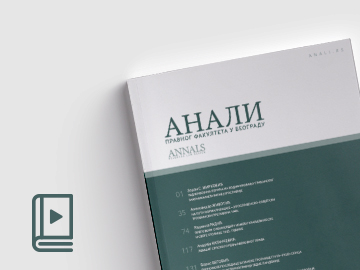
 © 1953 - 2026 · Annals of the